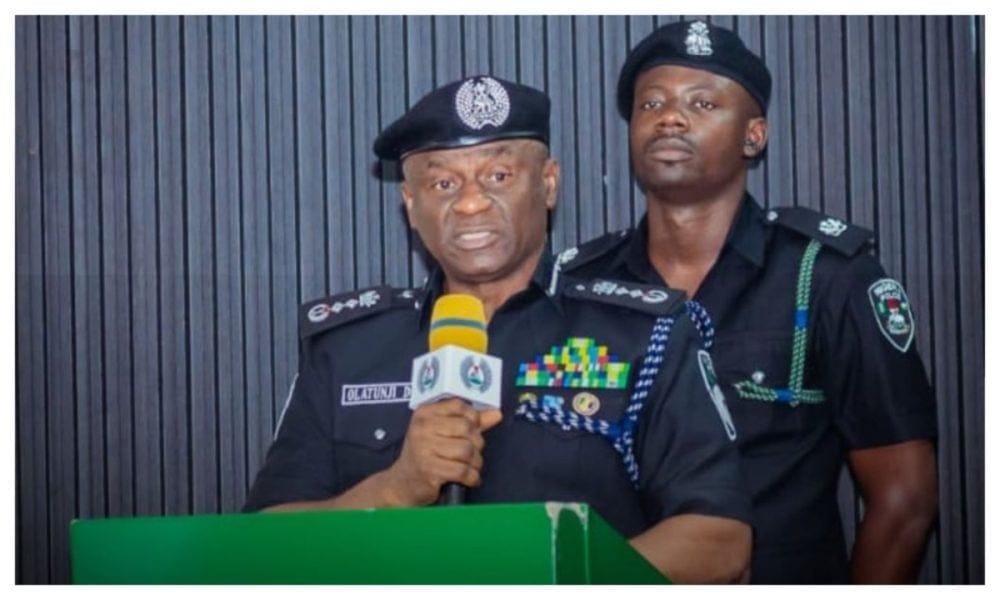
The Inspector-General of Police, Tunji Disu, has appealed to Nigerians to exercise restraint when recording police officers on duty, warning that excessive filming could distract and demoralise personnel carrying out their responsibilities.
Disu said while Nigerians have the constitutional right to record police officers performing official duties in public spaces, such rights should be exercised responsibly and without turning officers into subjects of social media content or skits.
The police boss made the remarks during a press conference in Abuja while reacting to a recent Federal High Court judgment which affirmed the right of citizens to film police officers in public places.
The Federal High Court sitting in Warri, Delta State, had in a landmark judgment delivered on March 17, 2026, ruled that Nigerians have the constitutional right to record police officers while performing their public duties.
The court, in suit number FHC/WR/CS/87/2025, held that arresting, harassing, intimidating individuals or confiscating their devices solely because they were recording police activities amounted to a violation of their constitutional right to freedom of expression under Section 39 of the 1999 Constitution.
However, Disu expressed concern that some Nigerians had allegedly taken the court ruling beyond its intended purpose.“Can we come to your offices and record you in your offices? Can we record even in the court?” the IGP asked.
He said the police hierarchy had reviewed the implications of the judgment after noticing an increase in the number of people approaching officers with cameras and mobile phones.
According to him, some members of the public now record police officers in locations where such actions may be unnecessary and distracting.
“The recent judgment on the recording of police officers became something of concern to us because citizens started coming out with their phones to record police officers everywhere, and this can be embarrassing,” Disu said.
“Some even went to restaurants and started recording police officers. Everywhere they see a police officer, they start recording, and this is very demoralising to us.”
The IGP stressed that police officers operate under difficult and sometimes dangerous conditions and require maximum concentration to effectively protect lives and property.
“We are doing very difficult jobs, and we need all the concentration in the world to be able to do our jobs,” he said.
“We are not saying they cannot exercise their rights of recording officers in public places while doing their jobs, but they should put restraint and not turn our police officers into content for their skit or anything.”
Disu noted that many police personnel are deployed to high-risk locations, including forests, remote areas and highways, where they face significant security threats while protecting citizens.
“If you look at where we have our officers, they are in dangerous areas, thick in the forests, thick in the bushes and on the highways.
In the middle of nowhere, these officers stay there morning and night to do their jobs of keeping other people safe,” he added.
The IGP’s comments come amid growing public debate over the right of Nigerians to record security personnel and other public officials while carrying out official duties.