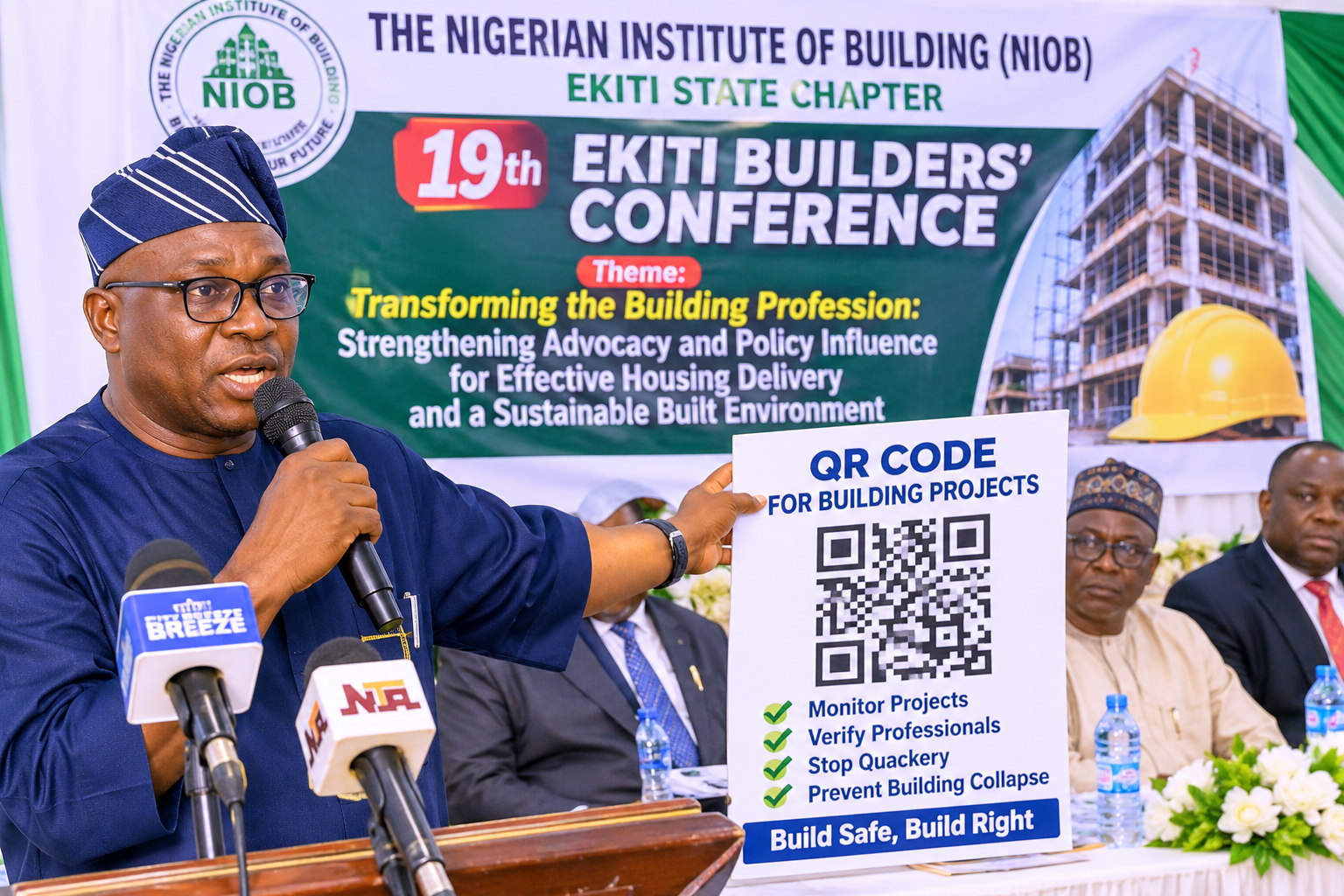
The Nigerian Institute of Building (NIOB), Ekiti State Chapter, has called on the state government to make Quick Response (QR) codes compulsory for building construction projects to curb quackery, improve professional accountability and prevent building collapse.
The State Chairman of the institute, Builder Adebiyi Adeniyi, made the call during the 19th Ekiti Builders’ Conference held at the Builders’ House, opposite Ekiti Parapo Pavilion, Ado-Ekiti.
Adeniyi said the proposed QR code system would enable authorities to monitor construction projects, verify registered building professionals and prevent unqualified individuals from undertaking building projects.
Also speaking, the Chairman of the College of Fellows, Builder Timothy Sunday Ojambati, urged members of the public to engage the services of registered builders, warning that the activities of unqualified practitioners and poor construction practices could result in building collapse.
He also called on the government to strengthen its partnership with professional builders to ensure safer construction practices across the state.
The Chairman of the Conference Planning Committee, Builder Aladetuyi Adekunle Dele, identified housing deficits, building collapse and quackery as major challenges confronting the building profession.
He explained that the conference, themed “Transforming the Building Profession: Strengthening Advocacy and Policy Influence for Effective Housing Delivery and a Sustainable Built Environment,” was aimed at promoting professional standards, technological innovation and collaboration among stakeholders.
Delivering the guest lecture, Professor Olawuyi Babatunde, a Professor of Construction Technology, Materials and Structures, urged builders to embrace digital innovations such as Building Information Modelling, drone technology and digital project management.
He said the adoption of these technologies would improve construction quality, strengthen site monitoring and promote a safer and more sustainable built environment.