

Burkina Faso has unveiled a new ceremonial military uniform made from locally woven fabric, marking another step in the country’s drive to promote self-reliance, cultural heritage, and national sovereignty under the leadership of Captain Ibrahim Traoré. The new attire was showcased during the graduation ceremony of the 25th class of Active-Duty Officer Cadets at the Georges-Namoano Military Academy.
The ceremonial uniform is inspired by the traditional Cencengu fabric, a handwoven textile associated with the Gulmu region in eastern Burkina Faso. By incorporating indigenous craftsmanship into military dress, the government aims to celebrate the country’s cultural identity while supporting local textile producers and artisans.
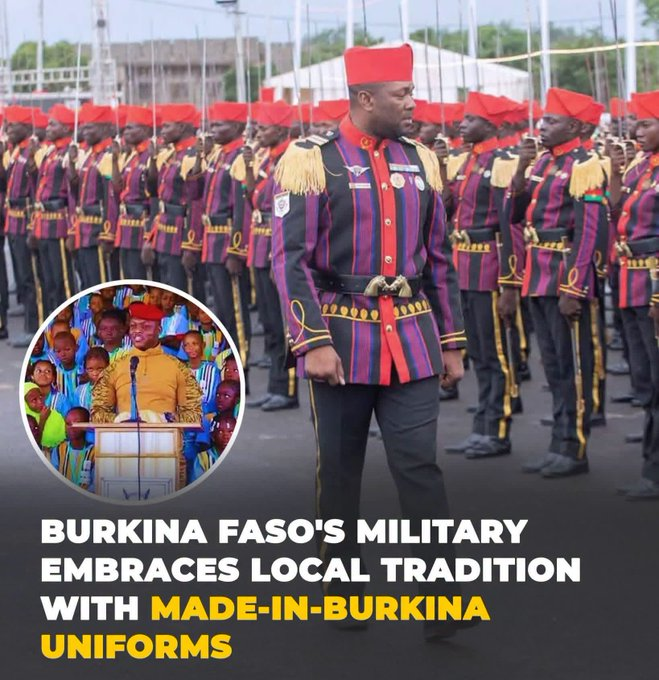
The graduation ceremony brought together more than 200 newly commissioned officers who will serve in Burkina Faso and several other African countries. During the event, Captain Traoré urged the new officers to serve with integrity, courage, and discipline, stressing that leadership is earned through service and commitment to the nation.
The unveiling of the locally produced ceremonial uniform aligns with Traoré’s broader policy agenda since assuming office in 2022. His administration has consistently encouraged the use of Burkinabè-made products, reduced reliance on imported goods, and promoted domestic industries as part of efforts to strengthen the country’s economic independence and national pride.
While the newly introduced attire has attracted widespread attention, available reports indicate that it is a ceremonial uniform unveiled for graduating officer cadets rather than a replacement for the standard operational uniform worn by the entire Burkina Faso Armed Forces.
The move has been widely viewed as more than a change in military dress. It reflects Burkina Faso’s continued emphasis on preserving its cultural heritage while reinforcing the message that national sovereignty extends beyond defence capabilities to include economic resilience, local production, and confidence in homegrown industries.