
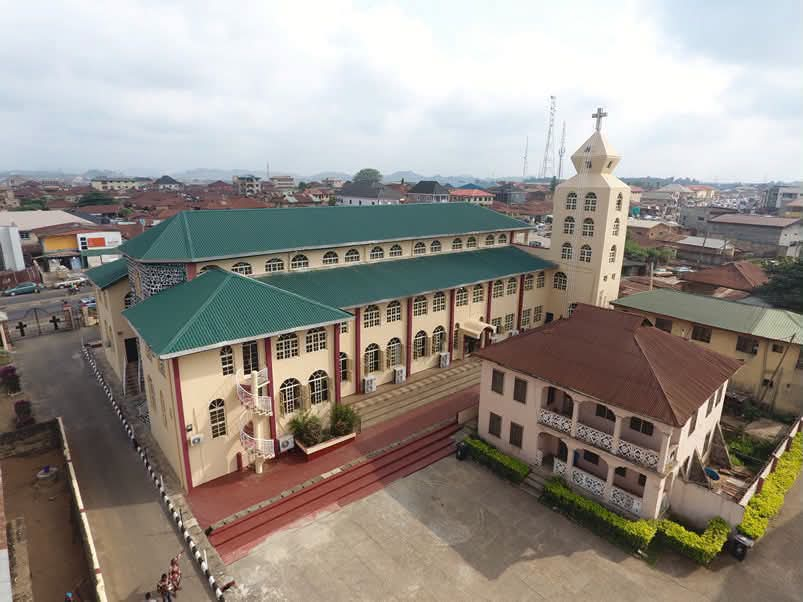
Former Special Adviser to the President, Babafemi Ojudu, has commended St Thomas’ Anglican Church, Isinkan, Akure, Ondo State, for combining spiritual activities with education, healthcare and vocational training.
Ojudu, who made the commendation in a write-up titled “A Church That Preaches With Action,” said he was struck by the church’s practical approach to addressing the needs of members and the wider community.
He said he recently visited Akure for the funeral service of his friend and professional colleague, late Tunde Akingbade, which was held at St Thomas’ Anglican Church.
According to him, his attention was drawn to several facilities within the church premises, including a Youth Skills Acquisition Centre, a clinic and St Thomas’ School.
Ojudu said the combination of spiritual, educational, vocational and medical services within the same religious compound was unusual and inspiring.
«“St Thomas’ Anglican Church appears to understand a truth that many religious organisations have either forgotten or chosen to ignore: the human being who comes to worship has needs beyond the spiritual,” he said.»
He argued that while prayer remains important, religious institutions should also provide practical support to people facing poverty, unemployment, ill-health and other challenges.
Ojudu noted that an unemployed young person needs skills and opportunities, while a sick person needs medical attention and a child needs quality education.
He therefore urged churches and mosques across Nigeria to channel part of their resources towards programmes that directly improve the lives of worshippers and members of their communities.
The former presidential aide suggested that religious institutions could establish skills acquisition centres, support small businesses, provide vocational training and create platforms through which young people can access employment and enterprise opportunities.
He also encouraged professionals within religious congregations to contribute their expertise to community development.
According to him, doctors, nurses and pharmacists can volunteer their services at church or mosque clinics, while engineers, artisans and entrepreneurs can train young people.
Teachers, lawyers and business professionals, he added, can equally contribute through academic support, legal assistance, mentorship and enterprise development.
Ojudu said such initiatives would help transform religious congregations into genuine communities where members contribute not only money but also their knowledge, skills, time and compassion.
He further criticised the growing emphasis on luxury and material acquisition by some wealthy religious organisations, arguing that the resources of religious institutions should be deployed to address the needs of their members.
He said the greatness of a church should not be measured by the size of its auditorium, the wealth of its leaders or the number of aircraft in its fleet.
Rather, he said, religious institutions should be judged by the number of lives they transform, young people they empower, children they educate, sick people they assist and families they help lift out of poverty.
Ojudu stressed that offerings and donations made by worshippers should be treated as a sacred trust because many people make personal sacrifices to contribute to religious organisations.
He described St Thomas’ Anglican Church as an example of “faith expressed through service”, saying its approach demonstrates how worship can be translated into meaningful human development.
He urged churches and mosques to emulate the model by combining spiritual activities with practical interventions that improve the welfare of their communities.
“Build sanctuaries, certainly—but also build people. Preach prosperity, if you must—but create pathways out of poverty. Pray for the sick—but also provide clinics, medicine and medical care,” Ojudu said.
He disclosed that he hoped to return to St Thomas’ Anglican Church to learn more about its initiatives and, if possible, contribute to them.
Ojudu concluded by commending Ven. Dr John Oso, Vicar of St Thomas’ Anglican Church, Isinkan, Akure, and other officials and leaders of the church for what he described as an inspiring example of religion put into practical service.
He said the church’s model represents religion at its most meaningful—not merely proclaiming love from the pulpit, but putting love to work in the lives of people.