The Federal Government has expressed its readiness to deepen Nigeria’s partnership with China to improve electricity supply, expand renewable energy and boost local manufacturing of power equipment.
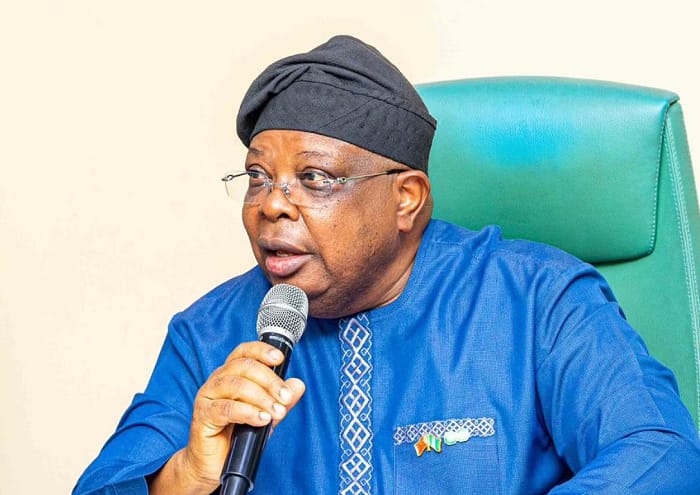
The Minister of Power, Joseph Tegbe, disclosed this on Wednesday night in Abuja at an event marking the 77th anniversary of the founding of the People’s Republic of China.
Tegbe said stronger Nigeria-China cooperation in the power sector could help the country achieve a more stable and reliable electricity supply while creating opportunities for local industrial development.
“As Minister of Power, I see particular promise in deeper cooperation on achieving reliable electricity, renewable energy, and the manufacture of power equipment in Nigeria through our cooperation with China,” the minister said.
He stressed that Chinese investment in Nigeria’s power sector should also focus on developing local technical capacity.
According to him, greater emphasis should be placed on training Nigerian engineers and technicians, strengthening local enterprises and ensuring that Nigerians can operate and maintain power infrastructure built through the partnership.
Tegbe said Nigeria and China had transformed their relationship from diplomatic friendship into a broad partnership covering infrastructure, healthcare, trade, investment and technical exchanges.
He cited Chinese involvement in major Nigerian projects, including the Lekki Deep Sea Port, railway modernisation projects and the Zungeru Hydroelectric Power Station.
“Nigeria appreciates China’s contribution through investment, financing, and engineering to landmark projects such as the Lekki Deep Sea Port, railway modernisation, and the Zungeru Hydroelectric Power Station, among many others,” he said.
The minister also commended China’s zero-tariff programme for Nigerian producers and reaffirmed Nigeria’s commitment to the One-China policy.
China commends Tinubu’s economic reforms
The Chinese Ambassador to Nigeria, Yu Dunhai, meanwhile, commended President Bola Tinubu’s economic reforms, saying they had created conditions for stronger economic cooperation between both countries.
Yu said Nigeria’s structural reforms, macroeconomic stabilisation efforts and measures aimed at improving the business environment had contributed to the country’s economic recovery.
“We highly commend President Tinubu’s structural reforms, macroeconomic stabilisation, and business environment enhancements, which have boosted Nigeria’s economic recovery and created optimal conditions for deeper cooperation,” the ambassador said.
He added that recent agreements covering economic partnerships and aquatic product exports had strengthened the institutional framework for expanding trade between Nigeria and China.
Nigeria-China trade hits $18bn
The Chinese envoy disclosed that bilateral trade between Nigeria and China reached $18 billion in the first half of 2026, representing a 35 per cent increase.
He said Chinese imports from Nigeria surged by 81 per cent during the period.
Yu said China was prepared to align its 15th Five-Year Plan with Nigeria’s Renewed Hope Agenda in areas including industrialisation, digital technology, green development and the blue economy.
He also invited Nigeria to join the World Artificial Intelligence Cooperation Organisation to strengthen cooperation in emerging technologies.
“Our future cooperation holds boundless potential,” Yu said, adding that both countries could promote development through innovation, openness and closer cooperation.
China highlights economic and technology opportunities
Reflecting on his two years in Nigeria, Yu praised the resilience and entrepreneurial spirit of Nigerians, saying his travels across the country had deepened his appreciation of the people.
He also noted that Nigeria and China were celebrating 55 years of diplomatic relations, describing the relationship as one that had grown through mutual respect and cooperation.
According to the ambassador, China’s economic growth and technological development provide additional opportunities for cooperation with Nigeria.
He said China’s economy grew by 4.7 per cent in the first half of 2026, with emerging sectors such as artificial intelligence, robotics and innovative pharmaceuticals contributing to growth.
Yu also highlighted China-led initiatives in data and artificial intelligence, as well as its zero-tariff treatment for 53 African countries.
He said the policy had contributed to a 24 per cent increase in Chinese imports from Africa in May and June.
The development comes as Nigeria continues to seek foreign investment, technical partnerships and infrastructure support to address challenges in the power sector and accelerate economic diversification.