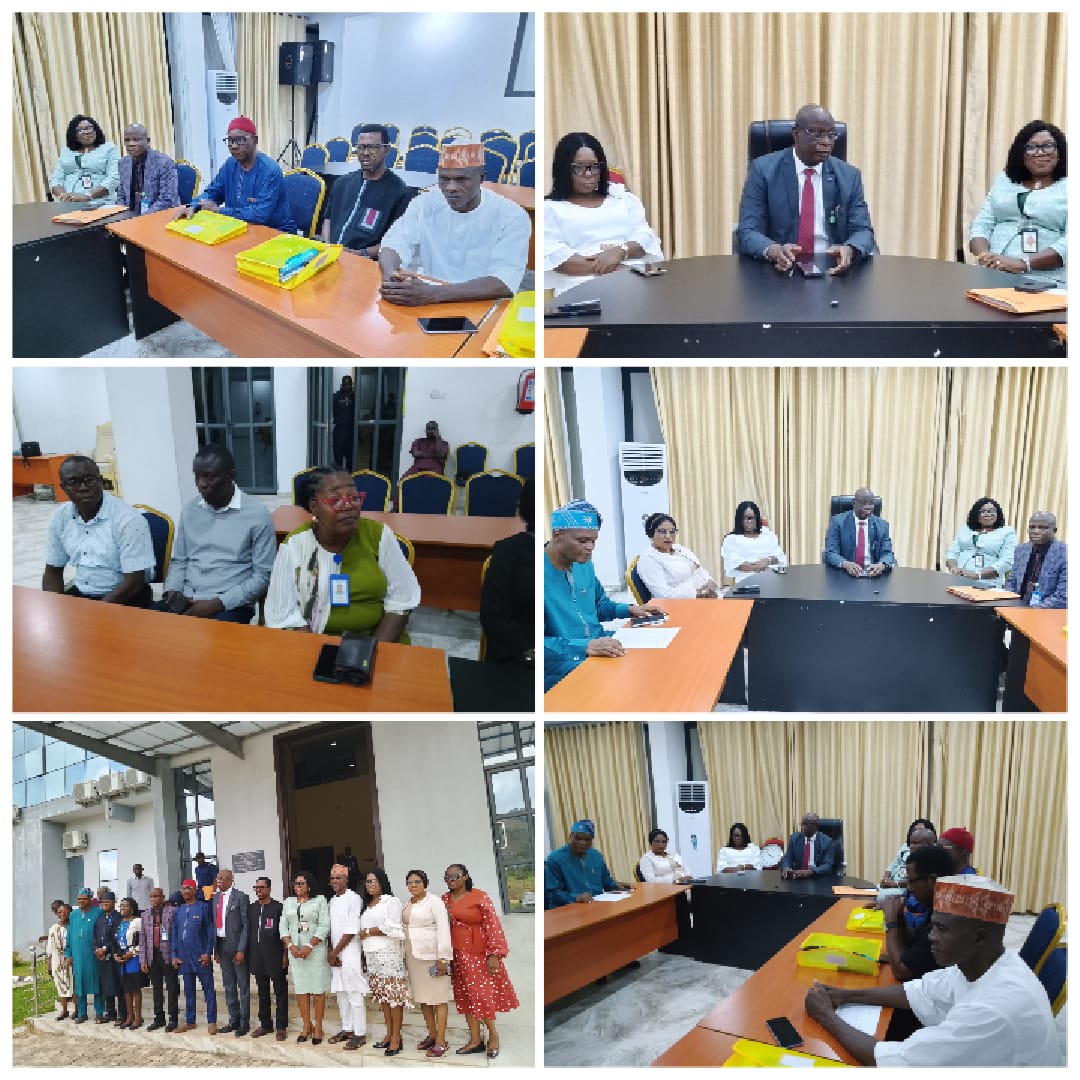
The Ekiti State Government has reaffirmed its commitment to supporting livestock farmers and agribusiness entrepreneurs through strategic investments in infrastructure, capacity building, market development, access to finance and institutional strengthening.
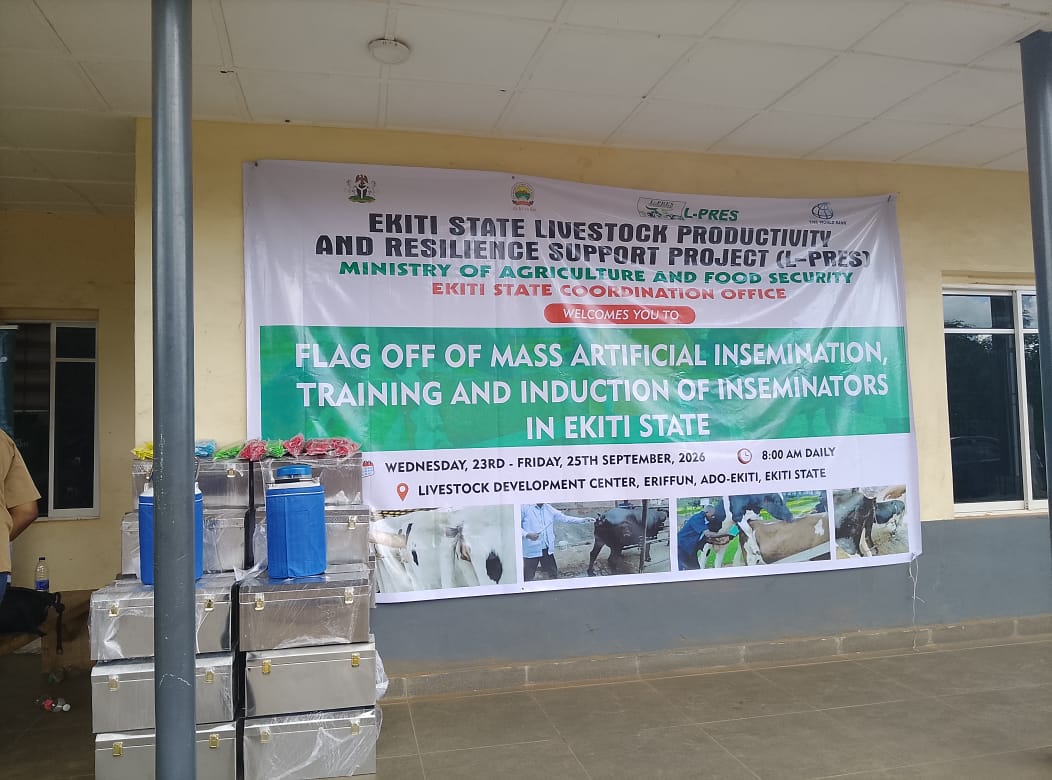
The Commissioner for Agriculture and Food Security, Ebenezer Boluwade, made the commitment on Wednesday at the flag-off ceremony for the mass artificial insemination of ruminants and induction of 30 artificial insemination technicians in the state.
The programme, held at the Livestock Development Centre, Eriffun, Ado-Ekiti, was organised under the Livestock Productivity and Resilience Support Project (L-PRES).
Boluwade said the sustainability of government interventions in the livestock sector depended largely on farmers adopting modern technologies capable of improving productivity and enhancing livestock production.
He said the artificial insemination programme was designed to improve the genetic quality of local livestock breeds and increase milk production, growth rates, carcass yield and the income of beneficiary farmers.
According to him, a survey conducted among L-PRES beneficiary farmers in Ekiti showed that livestock productivity was being affected by poor genetic quality and limited access to improved breeding services.
He explained that the situation had contributed to low milk yields, slow growth rates and reduced market value of livestock.
The commissioner said artificial insemination would provide an effective channel for genetic upgrading and multiplication of livestock, while also reducing the spread of sexually transmitted diseases among animals.
He added that reproductive materials and semen from animals with good genetic characteristics could be stored for extended periods, making the technology useful for sustained breed improvement.
Boluwade said Ekiti State was targeting the artificial insemination of 850 cows and 150 goats under the programme, while 30 professionals drawn mainly from the Animal Husbandry and Veterinary Departments would be trained and inducted as artificial insemination technicians.
He described the trainees as pioneers, being the first set of artificial insemination technicians to be trained in the state, and urged them to take the opportunity seriously.
The commissioner encouraged the participants to pay close attention to the technical and practical aspects of the training, stressing that livestock breed improvement required practical skills beyond theoretical knowledge.
He said the knowledge acquired would contribute to upgrading local ruminant breeds through faster growth rates, efficient feed conversion, improved carcass yield and greater resistance to diseases.
Boluwade also highlighted some of the livestock development interventions being implemented under L-PRES in Ekiti State.
They include the ongoing construction of an ultra-modern abattoir along Iworoka Road, establishment of pig slaughter slabs at Ikere, Ilawe and Ago-Aduloju, construction of solar-powered water points across the state, establishment of Farmer Field Schools and construction of commercial cattle markets at Ilasa and Ado-Ekiti.
He added that the state was also developing 30,000-capacity poultry estates at Emure, Igede and Ikale, alongside various capacity-building programmes aimed at improving livestock productivity.
The commissioner said the World Bank, through the National Coordination Office of L-PRES, was supporting mass artificial insemination across participating states to address challenges associated with livestock breeding and genetic improvement.
He expressed confidence that the programme would lead to noticeable genetic improvements in local ruminant breeds and contribute to economic growth and improved livelihoods in the state.
Boluwade commended the Ekiti State Coordination Office of L-PRES, development partners, facilitators and other stakeholders for their contributions to the livestock development programme.
Why artificial insemination training is important
The Lead Consultant for L-PRES in Ekiti State, Adekunle Olayiwola, said the training was designed to expose participants to the practical application of artificial insemination technology in livestock production.
Olayiwola explained that the trainees would acquire relevant skills needed to apply artificial insemination techniques in improving animal breeds and productivity.
Also speaking, the Ekiti State Coordinator of L-PRES, Olayinka Adedipe, represented by the Animal Husbandry Officer, Adelodun Olumuyiwa, said the production of local livestock breeds had declined in the state.
He said the training was therefore necessary to strengthen breeding practices and improve the quality and productivity of local breeds.
One of the trainees, Mary Olagoke, said the programme would expose her to the practical aspects of artificial insemination after acquiring theoretical knowledge in school.
Olagoke expressed optimism that the training would equip her with the skills needed to contribute to the improvement of local livestock breeds in Ekiti State.