
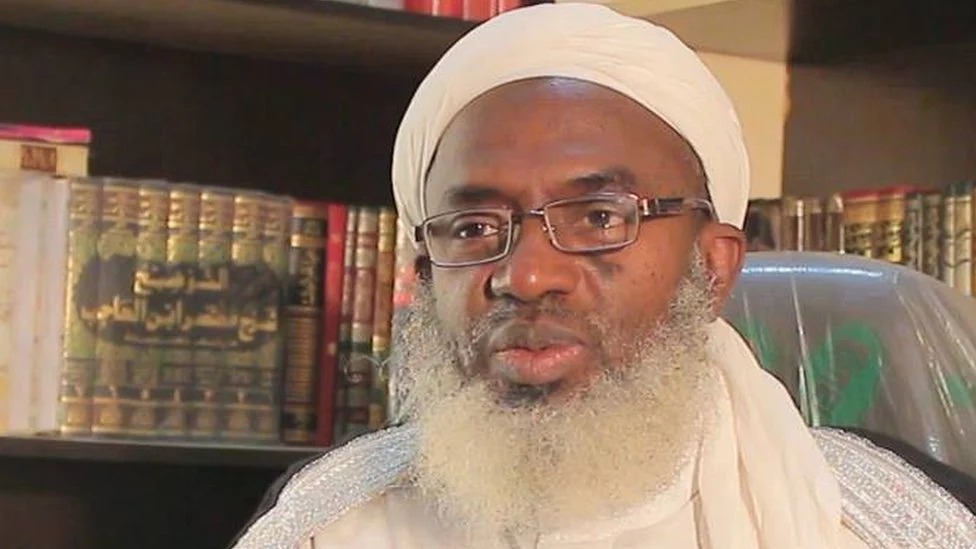
Controversial Islamic scholar Sheikh Ahmad Gumi has claimed that former President Olusegun Obasanjo once met with leaders of Boko Haram in Maiduguri, Borno State, during the early stages of the insurgency.
Gumi alleged that the meeting resulted in an agreement by the Boko Haram leaders to lay down their arms, but claimed the Nigerian government later failed to act on the understanding reached.
The Islamic scholar made the claim in a video while arguing that the government should be open to dialogue as part of efforts to address insecurity and insurgency in the country.
According to Gumi, Nigeria has negotiated with various groups involved in conflicts around the world and should not consider dialogue with Boko Haram a taboo.
“You negotiate with the Taliban, Hamas; you negotiate with everybody you have problems with; why can’t we negotiate with them? So it’s now like a taboo to negotiate with them?” Gumi said.
Gumi: Obasanjo Told Me About Boko Haram Meeting
Gumi claimed that Obasanjo personally told him about the alleged meeting with Boko Haram leaders in Maiduguri.
According to the scholar, the former president travelled to Maiduguri at the early stage of the insurgency and met with members of the group, who allegedly agreed to surrender their weapons.
“Look at Obasanjo; he told me this himself that, at the early stage of Boko Haram, he went to Maiduguri where he met with the leaders of Boko Haram and they agreed to lay down their arms,” Gumi said.
He further alleged that Obasanjo returned from the meeting but became frustrated after the government allegedly failed to implement the agreed measures.
“And he came back, but the government was reluctant to take action, and he was bitter about that; you can interview him,” he added.
The claim has not been independently established in the material cited, and Gumi urged journalists to speak with Obasanjo to verify the account.
Gumi Calls for Dialogue With Boko Haram
Gumi also urged the Nigerian government to take greater ownership of the country’s security challenges rather than relying heavily on the international community.
He argued that Nigeria should determine its own approach to resolving insecurity while engaging other countries on its own terms.
“Nigeria has to show the international community that this is our baby, this is how we want, and not depending on your ethics and standards,” he said.
The scholar also criticised what he described as blackmail and misinformation surrounding efforts to reconcile with armed groups.
According to him, the government should not allow such pressure to prevent it from exploring possible solutions to the insurgency.
Gumi Proposes Six-Month Amnesty Window
Gumi proposed that the government establish a six-month amnesty period for members of armed groups willing to surrender their weapons.
“If I were to be president, I would just come around and give a six-month amnesty window for them to put down their weapons,” he said.
His comments come amid continued debate over how Nigeria can address terrorism, banditry and other security challenges, including whether dialogue, amnesty and rehabilitation should form part of the government’s broader security strategy.