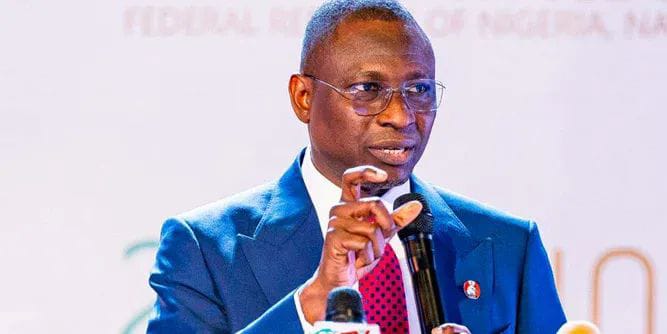

Vice President Kashim Shettima has returned to Nigeria after representing President Bola Ahmed Tinubu at the 18th BRICS Leaders’ Summit in New Delhi, India.
Shettima’s participation focused on strengthening Nigeria’s economic and diplomatic relations with India and other BRICS member and partner countries, with particular emphasis on trade, investment, technology, energy and human capital development.
A major highlight of the Vice President’s visit was his bilateral meeting with Indian Prime Minister Narendra Modi, where both leaders discussed expanding economic cooperation between Nigeria and India.
The discussions covered crude oil trade, pharmaceuticals, defence, digital technology, financial technology, renewable energy and investment.
According to a statement issued on Tuesday by Stanley Nkwocha, Senior Special Assistant to the President on Media and Communications in the Office of the Vice President, Nigeria also used the summit to seek stronger partnerships in agriculture, artificial intelligence, digital infrastructure, manufacturing, healthcare and energy.
Shettima meets WTO chiefDuring the summit, Shettima also met with the Director-General of the World Trade Organisation, Dr Ngozi Okonjo-Iweala.
The Vice President reaffirmed Nigeria’s commitment to multilateralism and the global trading system, stressing that nations could not achieve sustainable prosperity by isolating themselves from the international community.
He said, “I believe the world is greater than one nation. We will continue to support the WTO in championing the cause of multilateralism. We are essentially one human family and interconnected. You cannot divorce yourself from the global community.”
Tinubu calls for global governance reformsAt the BRICS summit, Shettima delivered President Tinubu’s message calling for reforms to global governance structures and international financial institutions.
Tinubu advocated a more representative and equitable international system that reflects contemporary economic and demographic realities.
The President also called for reforms of the United Nations Security Council and the international financial system to give developing countries and nations of the Global South a stronger voice in international decision-making.
“Nigeria supports a more representative, equitable and responsive global governance architecture, including reform of the United Nations Security Council and the international financial system,” Tinubu said.
The President further described BRICS as an important platform for strengthening the voice of the Global South and promoting a more inclusive international order.
Nigeria seeks stronger BRICS partnershipsNigeria’s delegation also pursued deeper cooperation with BRICS countries in strategic and emerging sectors, including artificial intelligence, digital public infrastructure, fintech, telecommunications, cybersecurity and biotechnology.
Tinubu also positioned Nigeria as a strategic gateway to Africa’s growing market, particularly through the opportunities presented by the African Continental Free Trade Area.
Shettima’s return marks the end of Nigeria’s participation in the New Delhi BRICS summit, where the Federal Government sought to attract foreign investment, expand international economic partnerships and strengthen Nigeria’s position in the changing global economic landscape.