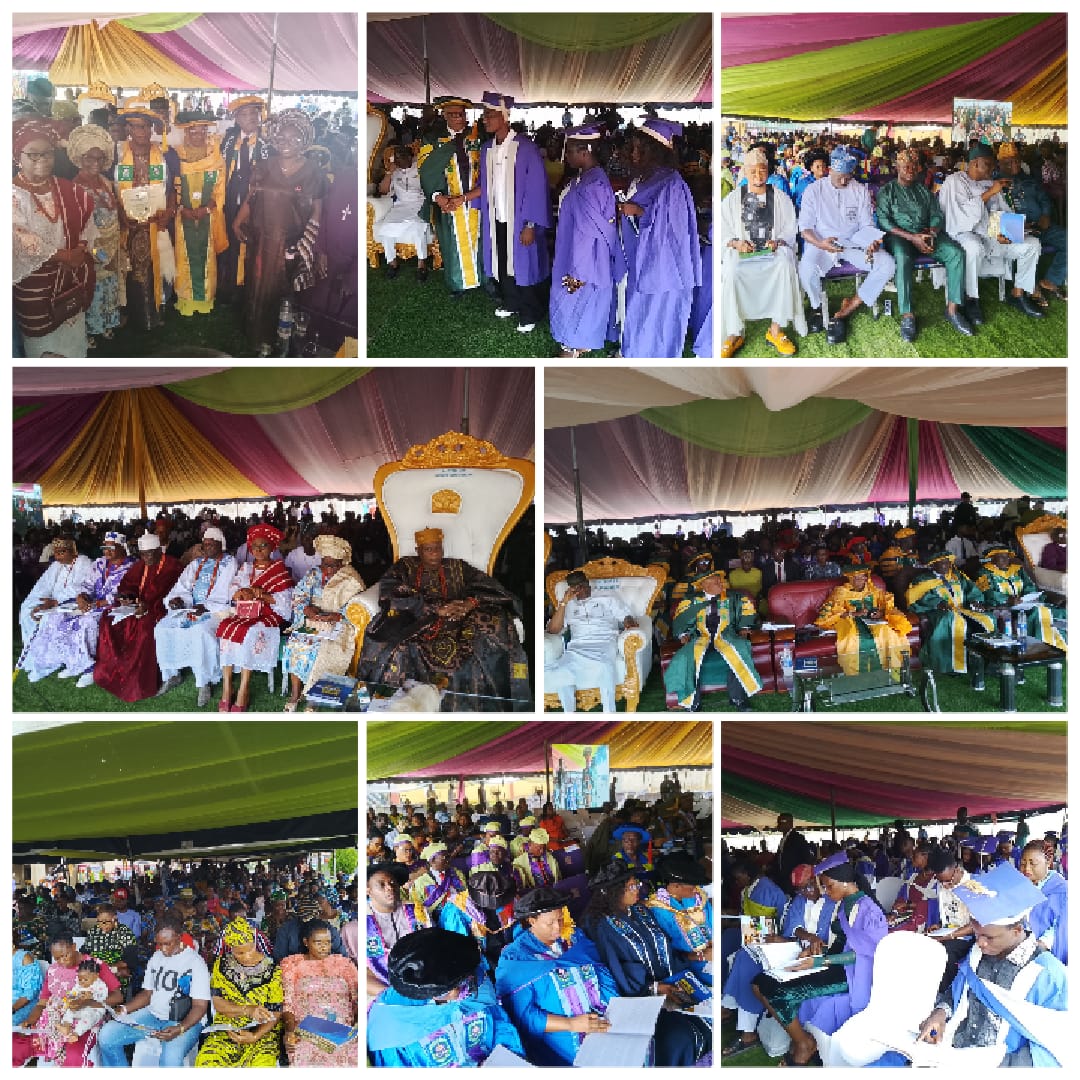
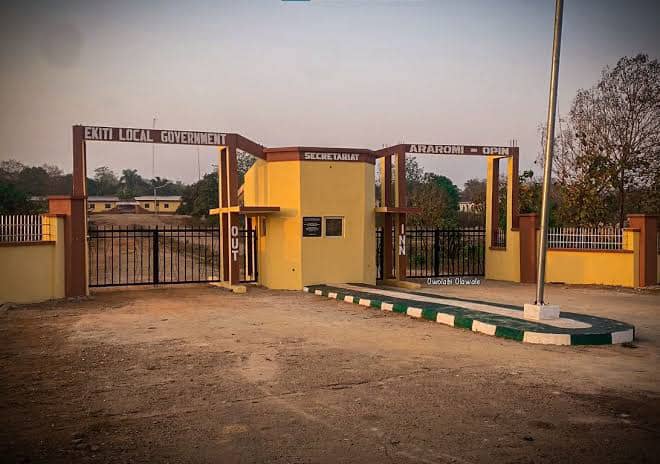
Away from the busy streets of Ekiti State’s capital, a different rhythm of life unfolds in Aiyekire Local Government Area, where farming, traditional institutions, small businesses and community life remain central to the identity of the people.
With its headquarters in Ode-Ekiti, Aiyekire is one of the 16 Local Government Areas created when Ekiti State was established on October 1, 1996.The local government was carved out of the former Ekiti East Local Government.
Ekiti State Government +1Today, Aiyekire stretches across a largely rural landscape comprising major towns and numerous villages, with communities including Ode-Ekiti, Agbado-Ekiti, Imesi-Ekiti, Aisegba-Ekiti, Egbe-Ekiti, Ijan-Ekiti, Iluomoba-Ekiti and Iro-Ekiti. Ekiti State Government
A LAND OF MANY COMMUNITIES
Aiyekire is predominantly inhabited by Yoruba-speaking people, with Christianity and Islam widely practised alongside traditional religious beliefs.Each of the major communities has its own traditional institution and local identity, while the communities remain connected through commerce, agriculture, culture and social relationships.
For residents, the local government is more than an administrative boundary. It is a collection of towns and villages whose people share a common Ekiti heritage while maintaining distinctive histories and traditions.
AGRICULTURE AT THE HEART OF THE ECONOMY
Agriculture remains one of the important foundations of economic life in Aiyekire.Across the communities and surrounding farm settlements, residents engage in farming, while agricultural produce supports local processing and trading activities.
The local government’s economic activities also include gari processing, palm oil and kernel processing, timber and sawmilling, block making, furniture production, bakeries and other small businesses.
Young people are also involved in trades such as motorcycle repairs, carpentry, fashion designing, hairdressing, petty trading and commercial transportation.
Ekiti State Government
This combination of agriculture, processing and small-scale enterprise provides livelihoods for residents and connects Aiyekire’s rural communities to markets within and beyond the local government.
A COMMUNITY OF ENTERPRISE
Beyond the farms, economic activity can be seen in the streets and business centres of the various towns.Small businesses, artisans, transport operators, hotels, petrol stations, banks and printing businesses form part of the commercial landscape identified by the Ekiti State Government.
Ekiti State GovernmentFor many young people, these informal and small-scale enterprises provide avenues for earning a living and acquiring practical skills.
The challenge, however, is how to transform these individual efforts into larger and more sustainable economic opportunities through access to finance, infrastructure, markets, technology and skills development.
EDUCATION AND HEALTHCARE
Education remains another important part of community development in Aiyekire.According to the Ekiti State Government, the local government has 46 public primary schools, 18 private nursery and primary schools, 12 public secondary schools and 13 private secondary schools. Ekiti State Government
Healthcare services are also spread across the area.The state government’s profile lists two general hospitals, located in Ijan-Ekiti and Ode-Ekiti, alongside comprehensive and basic health centres in several communities. Ekiti State Government
The distribution of these facilities is particularly important for a predominantly rural area, where distance and accessibility can determine how quickly residents receive medical attention.
A LAND WITH TOURISM POTENTIAL
Aiyekire’s story is not limited to agriculture and commerce.The local government possesses natural and cultural sites that could contribute to tourism development.
Among the attractions identified by the Ekiti State Government are the Little Ose/Ogbe Dam, Oloke Rock in Ode, the forest reserve at Egbe, Apariko Dam in Aisegba, Omi Agbahan in Iluomoba, Orisa Gbamo in Agbado and Ujilogun in Ijan. Ekiti State Government
These locations provide opportunities for nature-based tourism, cultural tourism and community-based economic activities if properly developed, preserved and promoted.For a community with a strong cultural identity and several natural attractions, tourism could become another avenue for creating jobs and supporting local businesses.
THE ROAD TO DEVELOPMENT
Like many rural and semi-urban communities, Aiyekire’s development is closely connected to the quality of its infrastructure.
Roads remain particularly important because farmers need access to markets, children need access to schools, patients need access to healthcare facilities and businesses need reliable transportation networks.
The state government has previously highlighted road projects in Aiyekire as part of development interventions across the state’s local governments.
In 2013, residents of Aiyekire and other local governments spoke during a monitoring exercise on five-kilometre local government road projects. Ekiti State Government
The continuing development question for the area is therefore how infrastructure can keep pace with the needs of its communities and unlock the economic value of its agricultural and natural resources.
PRESERVING THE CULTURAL IDENTITY
Despite changing economic and social realities, traditional institutions remain an important part of life in Aiyekire.The existence of recognised traditional rulers across the major towns provides a link between the present and the history of the communities.
Places such as Oloke Rock, Orisa Gbamo and Ujilogun also demonstrate how natural landscapes and cultural heritage can form part of the identity of a community.
Preserving these assets while opening the area to responsible development could help ensure that economic growth does not come at the expense of cultural heritage.
THE FUTURE OF AIYEKIRE
The story of Aiyekire is ultimately a story about potential.It is a local government with farmland, natural resources, traditional institutions, schools, healthcare facilities, businesses and a population whose livelihoods are closely connected to their communities.
Its future development will depend on how effectively these resources are harnessed.Better infrastructure can connect farmers to markets.Investment can expand local processing.
Skills development can create opportunities for young people. Tourism can bring attention to the area’s natural and cultural attractions, while stronger community institutions can help preserve its heritage.
From the administrative centre at Ode-Ekiti to the surrounding towns and villages, Aiyekire represents another important chapter in the story of Ekiti State — a place where agriculture remains vital, culture remains visible and communities continue to shape their own future.