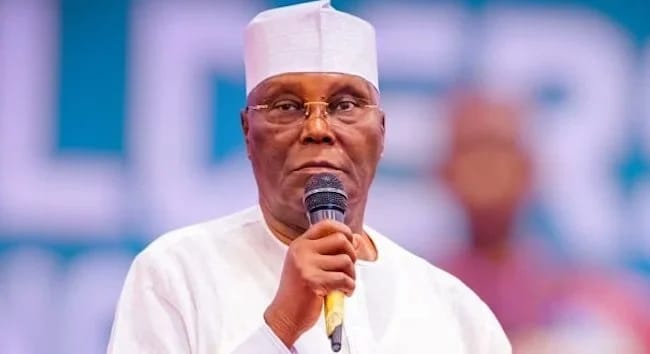
The Presidency has criticised former Vice-President Atiku Abubakar over what it described as conflicting statements regarding his position on petrol subsidy.
The Special Adviser to President Bola Tinubu on Information and Strategy, Bayo Onanuga, said the former vice-president and his aides had given different explanations of his proposed petrol subsidy policy within one week.
Onanuga made the position known in a statement issued on Wednesday titled, “Atiku confused on petrol subsidy; third U-turn in one week shows he is simply playing politics.”
According to the presidential aide, the controversy began after Atiku’s spokesperson, Paul Ibe, said the former vice-president would restore petrol subsidy if elected and subsequently phase it out.
However, another aide to Atiku, Phrank Shaibu, reportedly rejected the explanation, describing Ibe’s statement as an “unauthorised and misleading characterisation” of Atiku’s position.
Shaibu was said to have explained that the subsidy would remain in place until domestic refining capacity increased, fuel supply stabilised and competition in the downstream oil sector improved.
Onanuga said Atiku later intervened in the controversy and maintained that his position had not changed, while proposing what he called a targeted petrol subsidy.
Atiku was quoted as saying, “I will restore targeted subsidy and put purchasing power back in the hands of Nigerians.”
The Presidency questioned the apparent differences in the explanations offered by Atiku and his aides, arguing that the development raised concerns about the former vice-president’s proposed economic policy.
Onanuga said it was unclear why one aide would describe the subsidy as temporary and subject to eventual removal, while another would disown that position before Atiku himself reaffirmed his proposal for a targeted subsidy.
“This is not merely a matter of semantics. It is a serious policy contradiction,” Onanuga said.
The presidential aide also challenged Atiku to provide details of how the proposed targeted petrol subsidy would operate if implemented.
He asked the former vice-president to explain the expected cost of the policy, the categories of Nigerians who would benefit, how it would be funded and the conditions that would determine when the subsidy would eventually be removed.
The disagreement comes amid continued political debate over petrol subsidy and the impact of fuel pricing policies on Nigerians, with subsidy removal remaining a major issue in discussions about the country’s economy and the 2027 general elections.