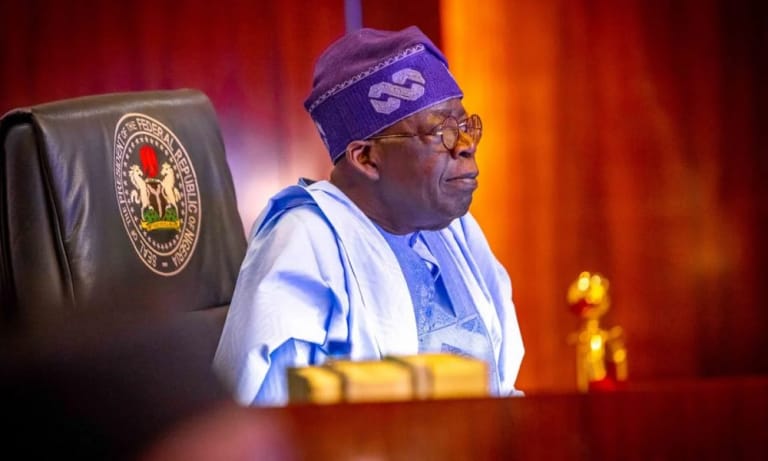
President Bola Tinubu has declared that Nigeria has moved beyond the most difficult phase of his economic reforms, saying his administration will now focus on delivering prosperity, jobs and improved living standards for Nigerians.
Tinubu made the declaration on Thursday in his Independence Day address to Nigerians as the country marked its 66th anniversary.
The President, whose broadcast was themed “From Reform to Prosperity,” defended major policies introduced by his administration, particularly the removal of petrol subsidy and the unification of the foreign exchange market.
According to him, the reforms were necessary to address long-standing weaknesses in the Nigerian economy, despite the hardship they initially created for citizens.
Tinubu said Nigeria had for years postponed difficult economic decisions, likening the situation to a sick patient who chooses painkillers instead of undergoing treatment for a serious illness.
He said, “Our reforms did not create the weaknesses in our economy. They confronted them.”Tinubu warns against return to petrol subsidyThe President also warned Nigerians against supporting calls for a return to petrol subsidies, describing such proposals as a reversal of the economic reforms undertaken by his administration.
He urged Nigerians to remember the reasons behind the subsidy removal and other economic changes before supporting politicians advocating a return to the policy ahead of the 2027 elections.
“Now, as certain influential but regressive voices would have us abandon the treatment and return ourselves to the abuse of addictive subsidies, we must resist their siren song,” Tinubu said.
The issue of petrol subsidy has become a major point of political debate ahead of the 2027 general elections, with opposition figures, including former Vice President Atiku Abubakar, advocating a targeted subsidy arrangement.
Nigeria’s economy growing, Tinubu saysTinubu said the reforms had begun producing measurable results, noting that Nigeria’s economy grew by more than four per cent in 2026.
He also listed lower inflation from its peak, improved foreign reserves, greater stability in the foreign exchange market and a decline in oil theft among developments recorded under his administration.
The President further said Nigeria recorded more than $6bn in non-oil export revenue in 2025, describing the figure as the highest in the country’s history.According to him, the developments showed that the Nigerian economy was becoming more resilient and attractive to investors.
‘Emergency treatment is over’Declaring what could become a new phase in his administration’s economic agenda, Tinubu said the government had moved from fixing structural economic problems to pursuing widespread prosperity.“The emergency treatment is over.
The foundation has been repaired,” he said.“For three years, our overriding purpose was to correct our nation’s course. Now, our purpose is simple: shared and widespread prosperity.”
The President said prosperity would mean more than improved economic statistics, stressing that Nigerians must feel the impact through better incomes, affordable food, reliable electricity, productive farms and stronger businesses.
Tinubu targets jobs, industries and agricultureTinubu said job creation, enterprise development and industrial expansion would become central to government policy.
He promised greater use of domestic gas to power industries, the revival of factories, expansion of digital connectivity and investment in skills required by employers.“I want to see more Nigerians making things,” the President said.“I want to see more Nigerian farms feeding our cities and supplying our factories.
I want to see Nigerian businesses selling Nigerian goods to the whole world.”He also expressed his desire to see young Nigerians build technology companies and create employment opportunities within the country.Government plans measures to tackle cost of livingOn the persistent cost-of-living crisis, Tinubu said the government would focus on reducing the cost of producing and transporting goods.
He listed expanded irrigation and dry-season farming, improved access to seeds and fertiliser, agricultural mechanisation, storage facilities and better transportation infrastructure among measures being pursued.
The President said investments in roads, railways and ports would also help reduce the cost of moving agricultural and manufactured products to consumers.He argued that lower production and transportation costs would eventually translate into cheaper goods in the market.
Tinubu highlights NELFUND, CREDICORP supportThe President also highlighted government intervention programmes aimed at supporting vulnerable Nigerians.
He cited the Nigerian Education Loan Fund, NELFUND, which provides access to higher education financing, as well as CREDICORP, which offers consumer credit for assets including vehicles and solar systems.Tinubu said the government was also strengthening its social protection system and updating the National Social Register to ensure assistance reaches poorer households.
He added that salaries and pensions had been paid on time since 2023 and that reforms in the pension system were designed to provide greater protection for retirees.“These programmes are not substitutes for prosperity. They are a bridge,” he said.
“Our objective is not to manage poverty more efficiently. We will defeat it.”‘No looking back’Tinubu ended his Independence Day address with a biblical reference, comparing Nigeria’s economic journey to the crossing of the Red Sea by the Israelites.
“Nigeria has corrected its course. We have passed through our own Red Sea. This is not the time to look back,” he said.The President said the country’s direction was now clear and urged Nigerians to remain focused on the next phase of economic development.
His address came amid continued concerns over the high cost of living and growing political activity ahead of the 2027 general elections, with economic policies, particularly petrol subsidy, expected to remain prominent issues in the political debate.