
Nearly 6.4 million Nigerian children aged between zero and 59 months are currently affected by acute malnutrition, including about two million suffering from severe acute malnutrition.
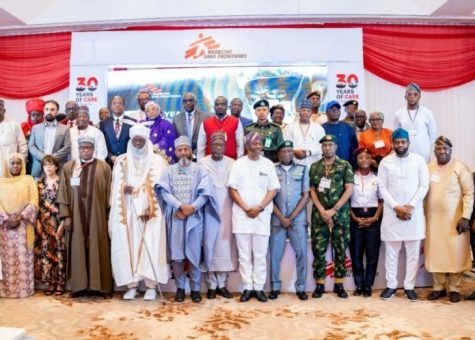
The figures were disclosed in Abuja during an event marking the 30th anniversary of Médecins Sans Frontières (MSF) operations in Nigeria, where the Federal Government, the United Nations and humanitarian stakeholders called for increased investment in the country’s health system.
The Minister of Budget and Economic Planning, Senator Abubakar Atiku Bagudu, said MSF treated more than 444,000 malnourished children in Nigeria in 2025.
Bagudu, who was represented by the Director of Internal Cooperation, Dr Sampson Ebimaro, said more than 353,000 children received treatment through outpatient feeding programmes, while over 90,000 were treated at stabilisation centres.
The Secretary to the Government of the Federation, Senator George Akume, said MSF’s 30 years of operations in Nigeria had provided important lessons in emergency response, maternal and child healthcare, nutrition and disease control.
Representing Akume, the Permanent Secretary of the Ecological Project Office, Dr Aishetu Gogo Ndayako Mohammed, said MSF had remained active in communities affected by conflict, displacement, disease outbreaks and malnutrition.
The UN Resident and Humanitarian Coordinator, Elsie Attafuah, said MSF treated more than 400,000 children for acute malnutrition in 2025, while also supporting maternal and newborn care, nutrition services and noma treatment.
Attafuah called for stronger links between humanitarian assistance and long-term recovery, stressing that displaced families returning to their communities would still need functioning essential services.
Meanwhile, MSF Country Representative Dr Aldikhari Ahmed said the organisation began operations in Nigeria in 1996 in response to a meningitis epidemic in Kano, Bauchi and Katsina.
He said MSF had since expanded its interventions to maternal and child healthcare, nutrition, vaccination, surgery, tuberculosis and HIV care, as well as emergency responses to conflict, displacement and disease outbreaks.