ADO-EKITI — At the heart of Ekiti State lies Ado-Ekiti, a city where centuries-old traditions meet the realities of a growing modern capital.
From the early morning activities of traders and transporters to the movement of civil servants, students, artisans and entrepreneurs, the city begins each day with a rhythm that reflects its importance as the administrative, commercial and cultural centre of Ekiti State.
Ado-Ekiti became the capital of Ekiti State following the creation of the state on October 1, 1996, but its significance predates the state’s creation. The city has historically served as an important administrative and traditional centre in the region.
Today, Ado-Ekiti is home to government institutions, educational establishments, businesses, markets, traditional institutions and a growing population that continues to shape the city’s identity.
A CITY ROOTED IN HISTORY
At the centre of Ado-Ekiti’s traditional identity is the institution of the Ewi.
The Ewi of Ado-Ekiti remains the paramount traditional ruler of the city, with the traditional institution playing an important role in preserving the history, customs and cultural heritage of the people.
The Ewi’s Palace stands as one of the city’s prominent cultural landmarks, connecting contemporary Ado-Ekiti with its traditional past.
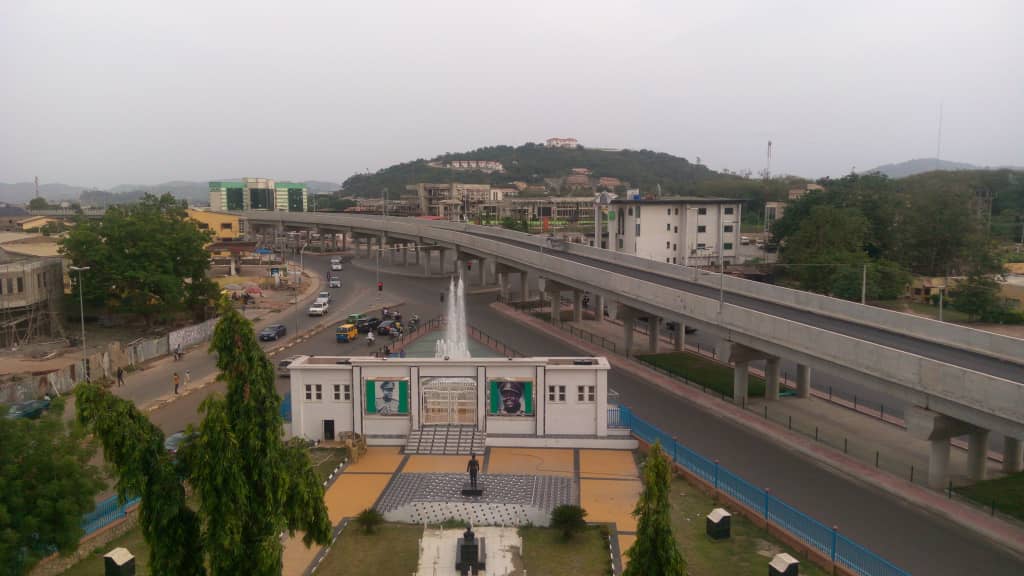
Another important landmark is the Fajuyi Memorial Park, named after Colonel Adekunle Fajuyi, the former Military Governor of the Western Region who was killed during the July 1966 military coup.
These landmarks are reminders that Ado-Ekiti is not simply a political capital but a city with a history deeply embedded in Nigeria’s wider story.
FROM FARMING COMMUNITY TO STATE CAPITAL
Like many communities in Ekiti, agriculture has historically been central to the livelihood of the people.
Yam, cassava, maize, rice, beans, cocoa and kolanut are among the crops associated with the area, while farming communities around Ado continue to contribute to the food economy of the city and the state.
But the character of Ado-Ekiti has changed considerably over the years.
The growth of government institutions, schools, businesses and residential areas has transformed the city into an increasingly urban economy.
Today, thousands of residents earn their livelihoods through trading, transportation, construction, hospitality, professional services, artisanship, agriculture and small and medium-scale businesses.
The city’s position as the state capital has also created a steady demand for goods and services, making Ado-Ekiti an important commercial centre for people from different parts of the state.
EDUCATION AT THE HEART OF THE CITY
Education is another major feature of life in Ado-Ekiti.
The city hosts several educational institutions, including primary and secondary schools as well as tertiary institutions.
The presence of these institutions has helped shape the city’s economy and population, with students, lecturers, teachers, education workers and businesses forming an important part of everyday life.
Around educational institutions, businesses providing accommodation, transportation, food, printing, telecommunications and other services have also emerged.
For many young people across Ekiti, Ado-Ekiti represents a destination for education, employment and professional opportunities.
A CITY IN DEVELOPMENT
As Ado-Ekiti continues to expand, the need for improved infrastructure has become increasingly important.
Road construction, urban expansion, transportation, drainage, electricity, water supply and waste management remain significant issues in the development of the capital.
The Ekiti State Government has continued to announce and implement infrastructure projects within the city and its surrounding areas.
Among recent projects are road construction and reconstruction initiatives aimed at improving connectivity across different parts of Ado-Ekiti.
In February 2026, the Ekiti State Executive Council approved about ₦2.188 billion for the construction of the GRA 3rd Extension-to-Pavilion/New Iyin Road project.
The state government also announced the reconstruction of the Spotless–Assembly of God/Opposite Olaoluwa Muslim Grammar School Road, alongside other road and street-lighting projects in parts of the capital.
Beyond the city, the reconstruction of the Ado-Ijan-Ilumoba-Ikole road is also expected to strengthen connections between Ado-Ekiti and other communities, institutions and economic locations within the state.
WHEN DEVELOPMENT MEETS URBAN PRESSURE
For residents, however, development is measured not only by the number of projects announced or constructed but by their effect on everyday life.
As the city expands, residents continue to deal with issues including traffic, road conditions, drainage, electricity supply, water availability, waste disposal, housing and employment.
The expansion of residential neighbourhoods has also increased pressure on existing infrastructure.
This means that the future development of Ado-Ekiti will require continued investment in infrastructure alongside effective urban planning and maintenance of existing facilities.
CULTURE THAT SURVIVES MODERNITY
Despite its transformation into a modern state capital, Ado-Ekiti continues to retain strong links to its cultural roots.
The Yoruba language, traditional institutions, festivals, indigenous cuisine and community traditions remain part of everyday life.
The city’s natural landscape also adds to its identity, with hills, rocks, streams and other features providing opportunities for tourism and recreational development.
For a city seeking to attract more visitors and investment, these cultural and natural assets represent resources that can be developed while preserving their historical significance.
THE PEOPLE AND THE FUTURE
Perhaps the most important story about Ado-Ekiti is the story of its people.
Behind the government buildings and major infrastructure projects are traders opening their shops each morning, farmers cultivating their land, artisans working in small workshops, students pursuing education and young entrepreneurs trying to build businesses.
Their activities keep the city moving.
As Ado-Ekiti continues to grow, the challenge will be to ensure that its development remains inclusive and that its historical and cultural identity is not lost in the process of urbanisation.
The city has already moved from an ancient traditional settlement to an administrative centre and eventually to the capital of Ekiti State.
Its next chapter will be shaped by how effectively its people, government, businesses and communities respond to the opportunities and challenges created by that growth.
For now, Ado-Ekiti remains what it has become over generations: a city where Ekiti’s history, government, culture, education and economic life come together.