A university don, Engr. Prof. Moses Ogundipe, has called on the Federal Government to explore and refine Nigeria’s largely untapped natural bitumen resources to reduce road construction costs, improve infrastructure and boost economic growth.
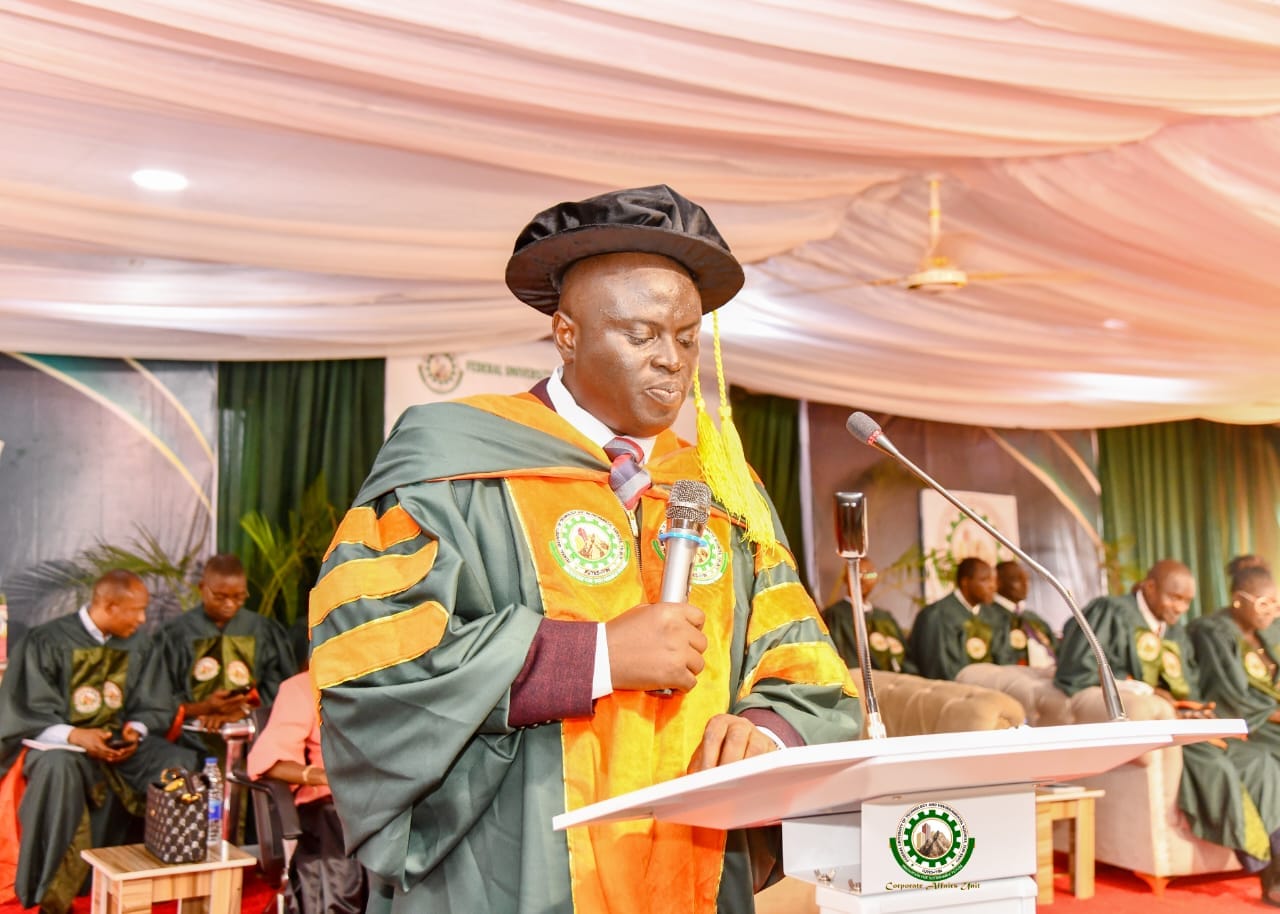
Ogundipe made the call while delivering the maiden inaugural lecture of the Federal University of Technology and Environmental Sciences, Iyin-Ekiti (FUTES-IYIN), titled, “Paving the Way to Sustainability: Asphalt Innovations for Safe and Durable Road Pavement.”
He said developing local bitumen resources would guarantee a cheaper and more reliable supply of materials for asphalt production, reduce dependence on external sources and create employment opportunities.
The professor also advocated increased investment in sustainable road construction technologies, particularly Stone Mastic Asphalt (SMA), which he identified as a more effective solution to pavement deterioration and rutting on Nigerian roads.
He urged relevant government ministries and agencies to collaborate with universities and industry stakeholders to review existing road construction standards and adopt sustainable materials capable of delivering durable infrastructure.
Ogundipe further recommended the integration of Life Cycle Costing and Life Cycle Assessment into public procurement processes to encourage contractors to adopt cost-effective and environmentally sustainable construction methods.
He stressed that road infrastructure policies should be guided by credible research and reliable data, calling for regular monitoring and documentation of road conditions, pavement failures and maintenance activities.
The don also proposed the establishment of a national pavement test track equipped with Heavy Vehicle Simulators to enable researchers to test innovative construction materials and assess their durability under different conditions.
Identifying inadequate research funding and weak collaboration between universities and industries as major challenges, he called for increased government investment in research and development, improved engineering facilities and stronger partnerships between academic institutions and the private sector.
Earlier, the Vice-Chancellor of FUTES-IYIN, Prof. Gbenga Aribisala, said universities must go beyond awarding degrees by developing research-driven solutions to challenges confronting society.
Aribisala described the inaugural lecture as an important platform for intellectual engagement and knowledge sharing, reaffirming the institution’s commitment to research, innovation and collaborations that promote national development.
He expressed confidence that the recommendations from the lecture would stimulate further research and contribute to informed policy decisions, particularly in infrastructure development, technology and environmental sustainability.